Key takeaways
- Electrode geometry must match the joint and access envelope.
- Material choice balances conductivity, strength, wear and sticking behavior.
- Cooling paths and alignment affect both life and process stability.
- A dressing and replacement standard should be part of production planning.
What the electrode must do
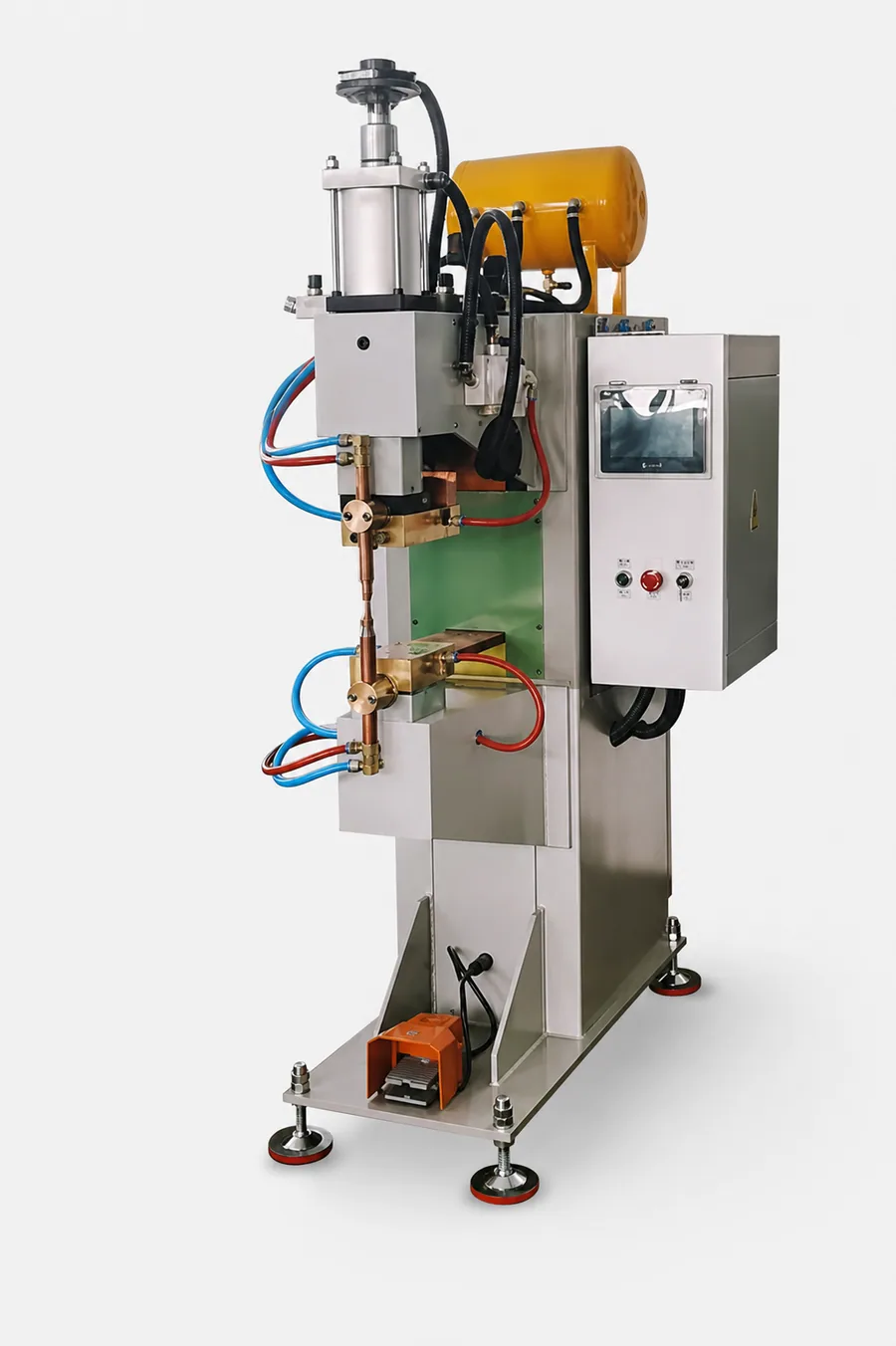
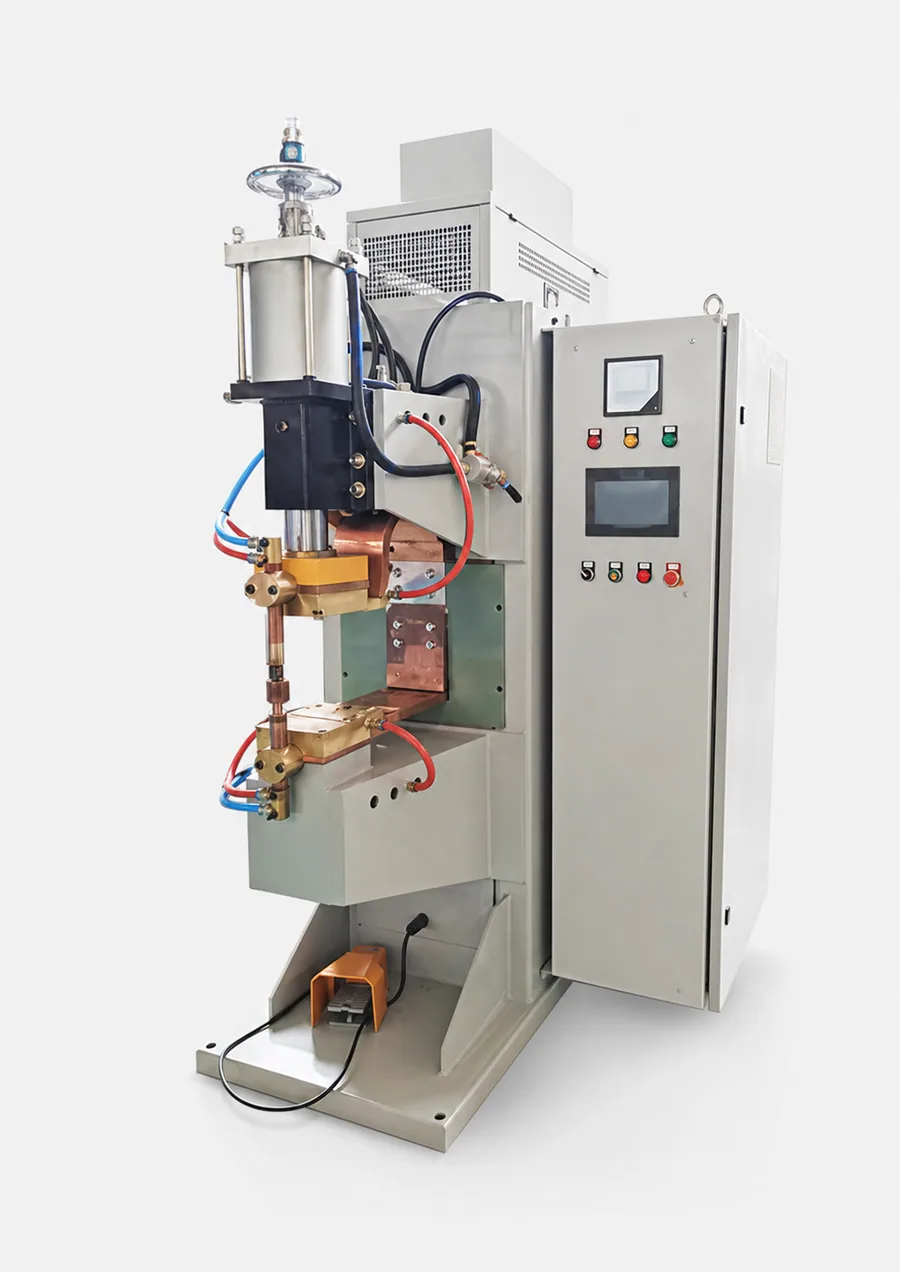
During a resistance weld, the electrodes transmit current and force into the workpiece. Their contact face influences current density and surface marking, while the shank and holder conduct heat toward the cooling system.
A practical design must also resist bending, remain aligned under load and allow maintenance without disturbing the fixture.
Material and face geometry
Copper alloys are commonly used because they combine electrical and thermal conductivity with mechanical strength. The correct grade depends on the workpiece material, force, temperature and wear mechanism. A supplier should confirm the intended electrode material rather than applying one grade to every job.
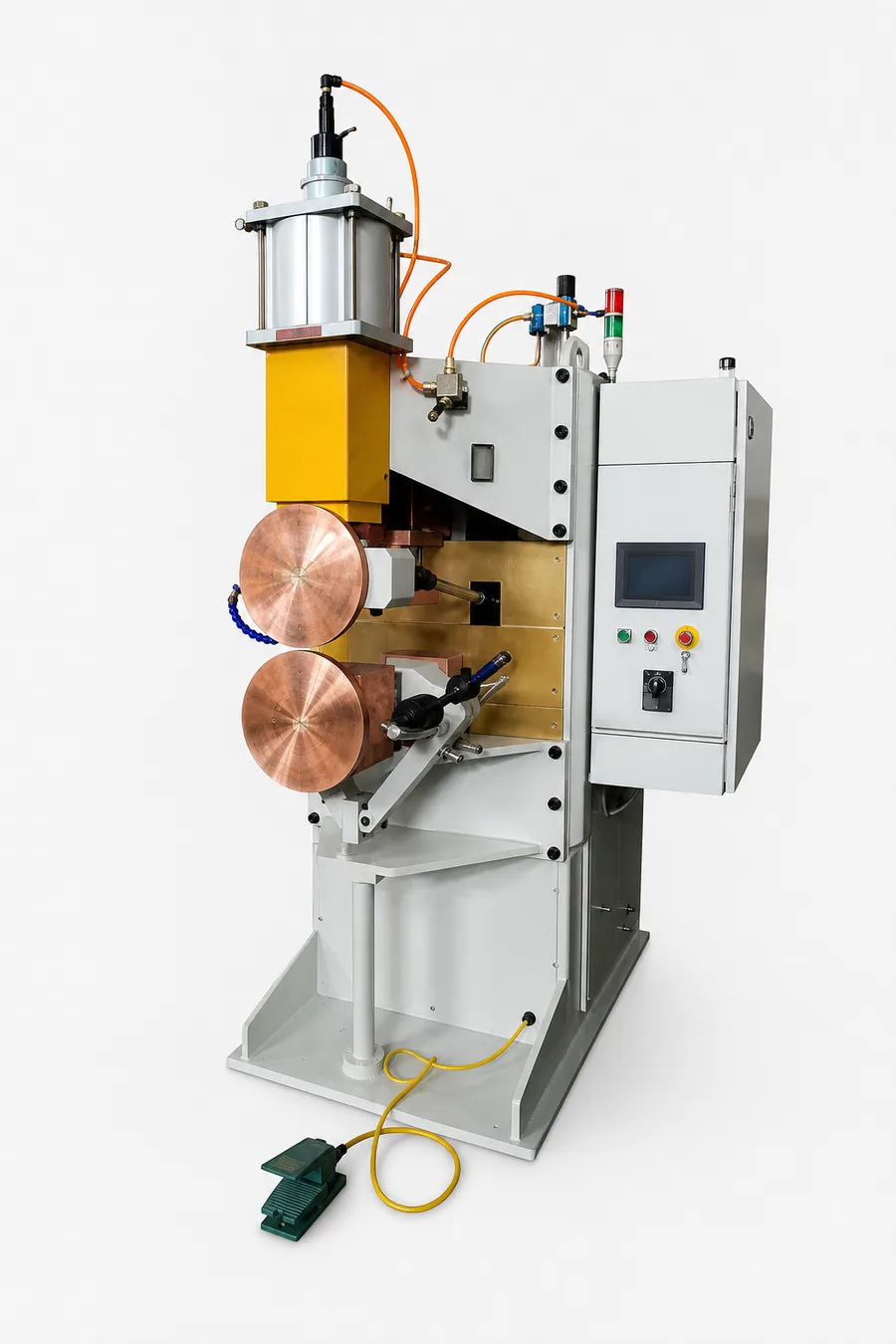
Flat, domed, radiused, offset and shaped faces concentrate current differently. Projection welding may use broad electrodes that support the part while the projection defines the current concentration.
| Design factor | Why it matters | RFQ information |
|---|---|---|
| Face size and shape | Influences current density, indentation and access | Joint drawing and surface requirement |
| Electrode material | Balances conductivity, strength, wear and pickup | Workpiece material and coating |
| Shank and holder | Transfers current, force and cooling | Force, duty cycle and machine interface |
| Cooling passage | Removes heat and supports stable production | Cycle rate and available water conditions |
Cooling and alignment
Cooling should bring water close enough to the working end to remove heat without weakening the electrode. Restricted flow, scale or a poorly positioned cooling tube can increase face temperature and accelerate wear.
Upper and lower electrodes should meet on the intended axis. Misalignment creates uneven pressure and can cause asymmetric indentation, inconsistent current flow or accelerated edge wear.
- Specify cooling-water quality, temperature and flow expectations
- Provide adjustment for final electrode alignment
- Check holder, arm and fixture deflection under force
- Keep hoses and conductors clear of moving tooling
Plan dressing and replacement before production
Electrode faces change with use. A production plan should define when to inspect, dress or replace them, how to restore the specified face geometry and how to verify alignment after maintenance.
Final machine selection and electrode design should be validated with the actual workpiece, material stack and production target.